Untreated Brass
Untreated brass naturally changes over time, gradually developing a deeper patina. Its surface changes with touch and use, taking on variations in color and sheen.

Untreated brass has a surface that naturally changes over time. Comprising primarily of copper and zinc, the material responds to its surroundings, gradually developing a deeper, more nuanced patina.
In our collection, untreated brass can be found on the handmade tray of the Whisky Chair and as the circular brass inlay in the tabletop of the Butterfly Table. Brass is a relatively soft material, so its surface will naturally show signs of touch and use. Its color and sheen change over time, and the patina becomes part of the material's evolving character.
The brass can be polished to restore a lighter, brighter appearance. We recommend using only products specifically made for cleaning and polishing metal, such as cloths from Dr. Beckmann or Sterling Polish Company. Polishing requires patience and caution, particularly when working close to the wooden components. If in doubt, please contact info@finnjuhl.com.
Untreated brass naturally changes over time, gradually developing a deeper patina. Its surface changes with touch and use, taking on variations in color and sheen.
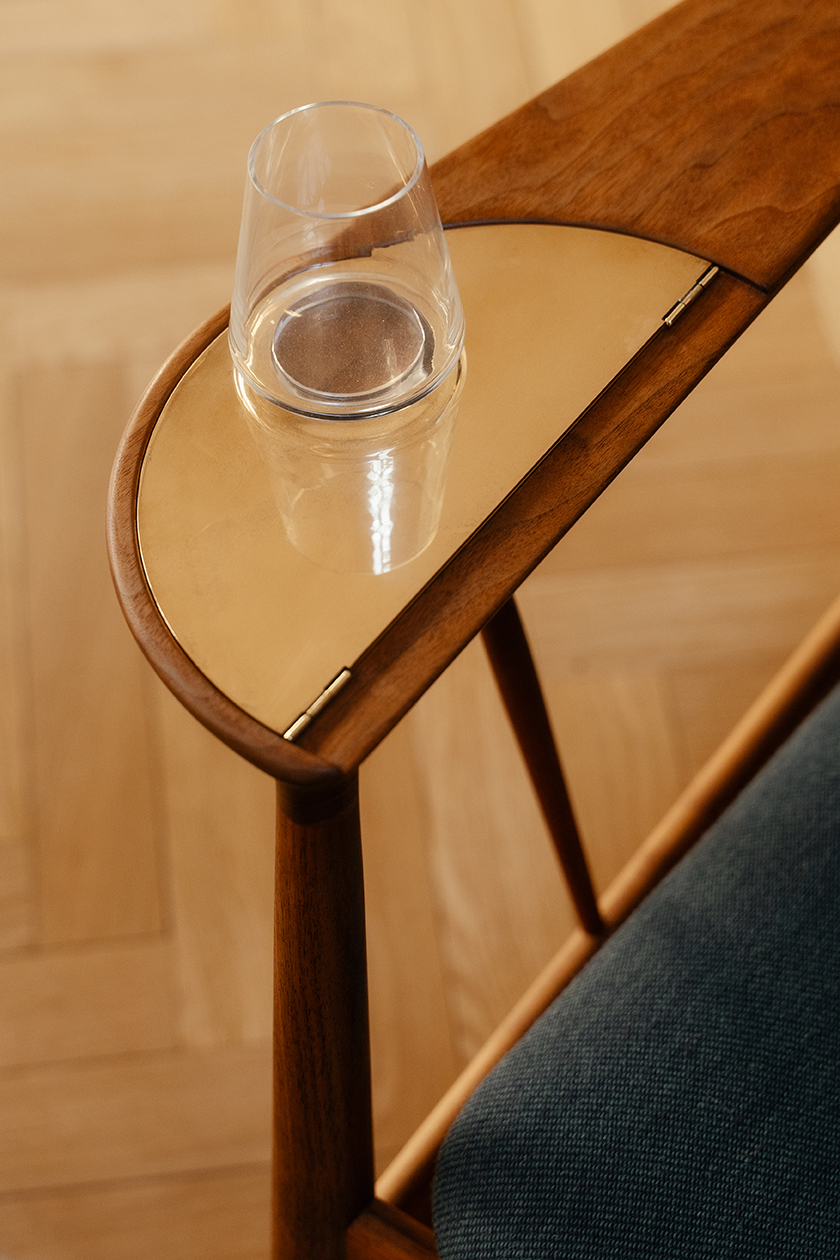
The brass surface before patination. Its lighter, polished appearance gradually changes over time as the material responds to its surroundings.
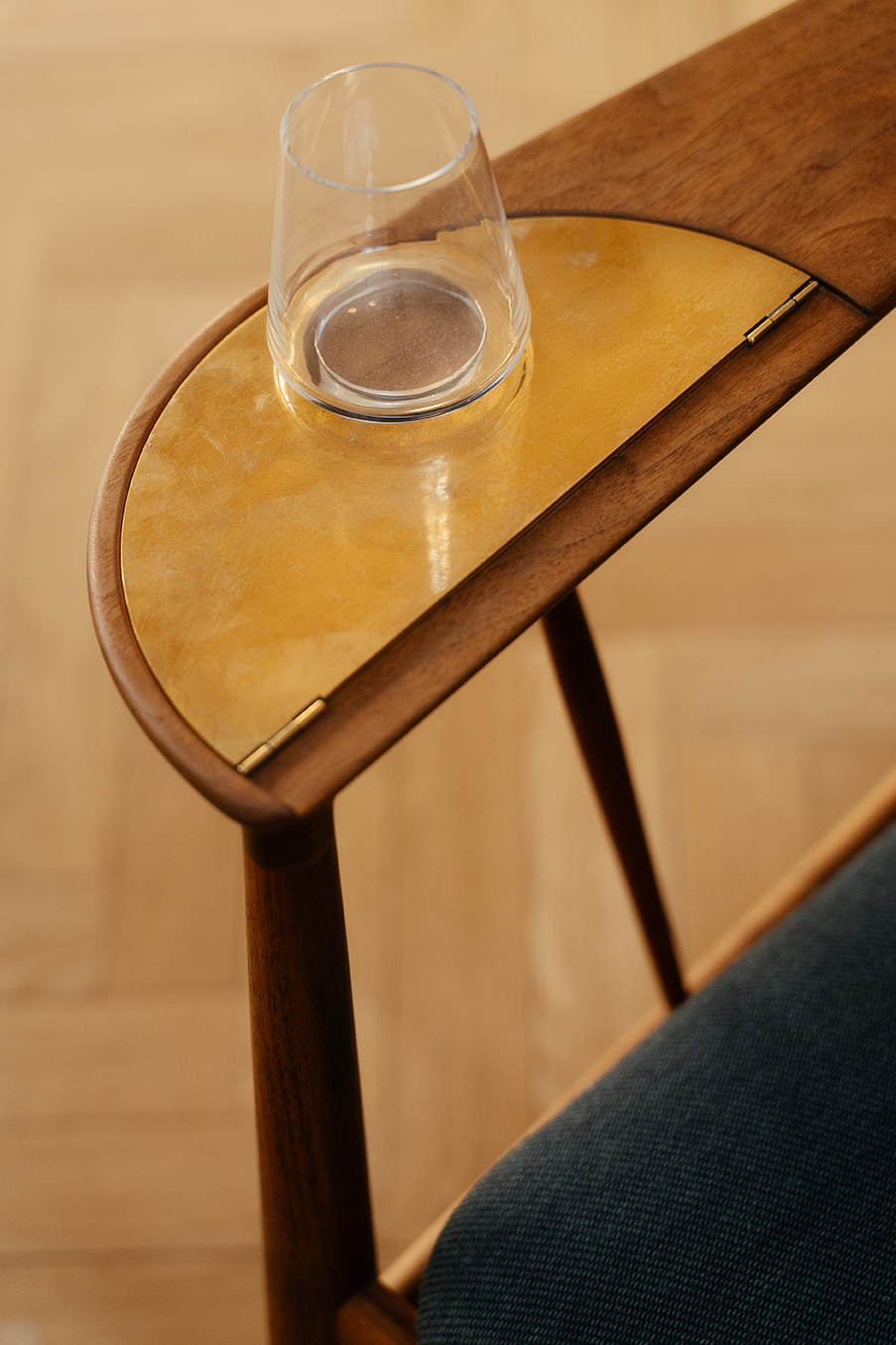
Over time, the surface becomes darker and more nuanced, while traces of touch and use become part of the surface.