The Chieftain Chair | Finn Juhl | 1949
Please note that the versions shown here represent only a selection of the many available options. For a complete overview of colors and materials, please explore the material page.
The Chieftain Chair | Finn Juhl | 1949
One of Finn Juhl's most iconic masterpieces, the Chieftain Chair represents the peak of his career as a furniture designer. Finn Juhl was inspired by free, modern art and foreign cultures, and the chair came to signify a renewal in Danish furniture design when it was first presented in 1949. Today, it is produced only by the most skilled cabinetmakers, in either walnut or oak, and upholstered by hand in Denmark using the finest quality leathers.
Wood Type
-

Walnut
-

Oak Dark Oil
-

Oak Clear Oil
Upholstery
Leather
-

Vegetal Nature
-

Elegance Black
-

Elegance Walnut
One of Finn Juhl's most iconic masterpieces, the Chieftain Chair represents the peak of his career as a furniture designer. Finn Juhl was inspired by free, modern art and foreign cultures, and the chair came to signify a renewal in Danish furniture design when it was first presented in 1949. Today, it is produced only by the most skilled cabinetmakers, in either walnut or oak, and upholstered by hand in Denmark using the finest quality leathers.
Product information
- Design:
- Finn Juhl
- Year:
-
1949, relaunched in 2002
- Materials:
-
Frame: Walnut or oak
- Upholstery:
- Leather
- Model and dimensions:
- FJ 4900
- W: 100 cm | D: 88 cm | H: 92.5 cm
- Seat height: 34.5 cm.

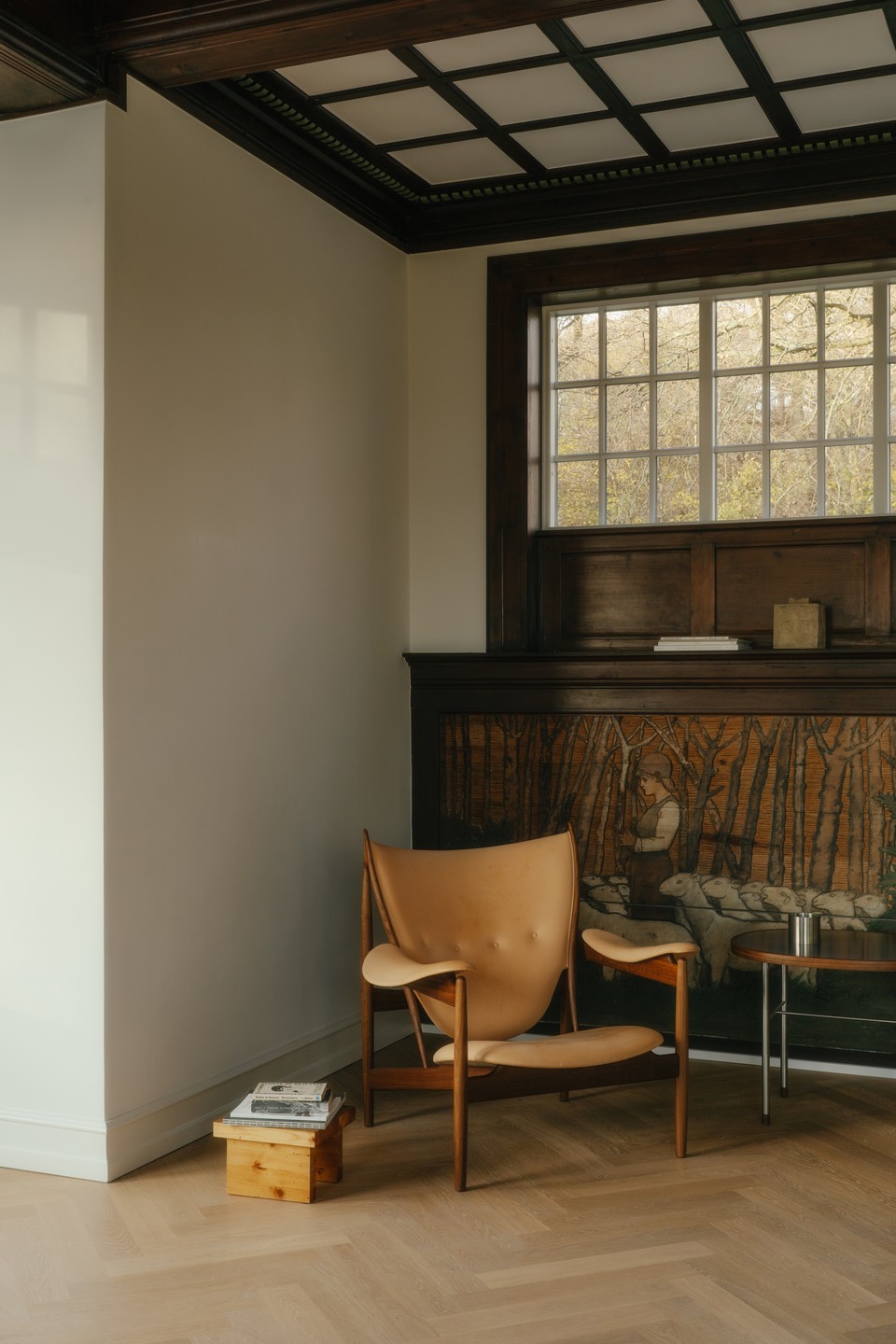
The Chieftain Chair in walnut upholstered with 'Vegetal' leather.
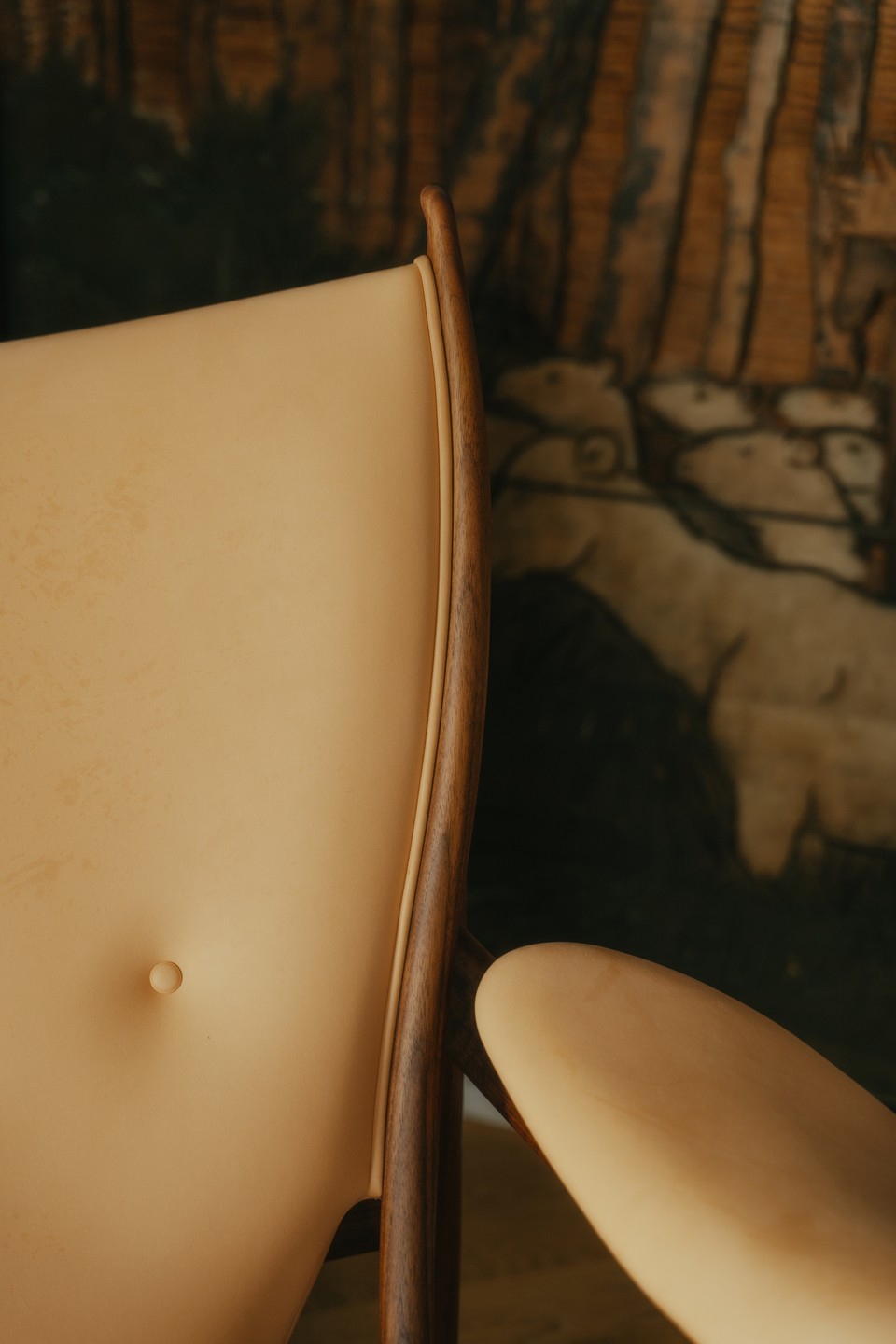
The Chieftain Chair in walnut upholstered with 'Vegetal' leather.

About the Chieftain Chair
An Icon Within Furniture
Today, the Chieftain Chair is recognized as one of the most important exponents of the Danish Modern movement in the U.S. during the 1950s. For this reason, Finn Juhl is often considered the founding father of Danish Modern.
Inspired by modern art and foreign cultures, the Chieftain Chair, with its organic shapes, liberated itself from traditional Danish furniture design and strict functionalism in shape, construction, and materials.
More sculptural than conventional, the chair marked a bold departure from the prevailing ideals of the time. Its generous dimensions and commanding presence demand space, both physically and aesthetically – making it a true statement piece.
From Sketch To Statement
The Process Behind the Chair
The separation of the carrying structure (the frame) and the carried elements (the seat and back), a hallmark of Finn Juhl's furniture, is particularly clear in the Chieftain Chair, which is a design tour de force and undoubtedly his most expressive and iconic piece.
Although the Chieftain Chair is now regarded as one of the most celebrated pieces in the history of Danish design, Finn Juhl himself remained modest about its creation and often downplayed the idea that there had been any deliberate intention behind the design. At the Cabinetmakers' Guild Exhibition, the chair was displayed alongside a visual collage of weapons and crafts from various tribal cultures that had inspired him.


Reflecting on the design process years later, Finn Juhl described how the idea came together almost spontaneously:
"I started drawing the Chieftain Chair one day in the spring of 1949. I was at home, and I started drawing a small sketch around 10 AM with just four vertical lines connected with something. By two or three o'clock in the morning, I had painted it. But in reality, I don't know how long it took me to design that chair. Perhaps I had a vague idea for some time that I wanted to design something bigger. There had been so many small, handy chairs, so I probably felt like designing something a bit more pompous…"

The Chieftain Chair with 'Elegance' leather upholstery in the color 'Black'.

The Chieftain Chair with 'Elegance' leather upholstery in the color 'Black'.

"There had been so many small, handy chairs, so I probably felt like designing something a bit more pompous..."


